Part-Time Work Rules for International Students in Malaysia: What You Can and Cannot Do
Md Salah Uddin
1 readers so far
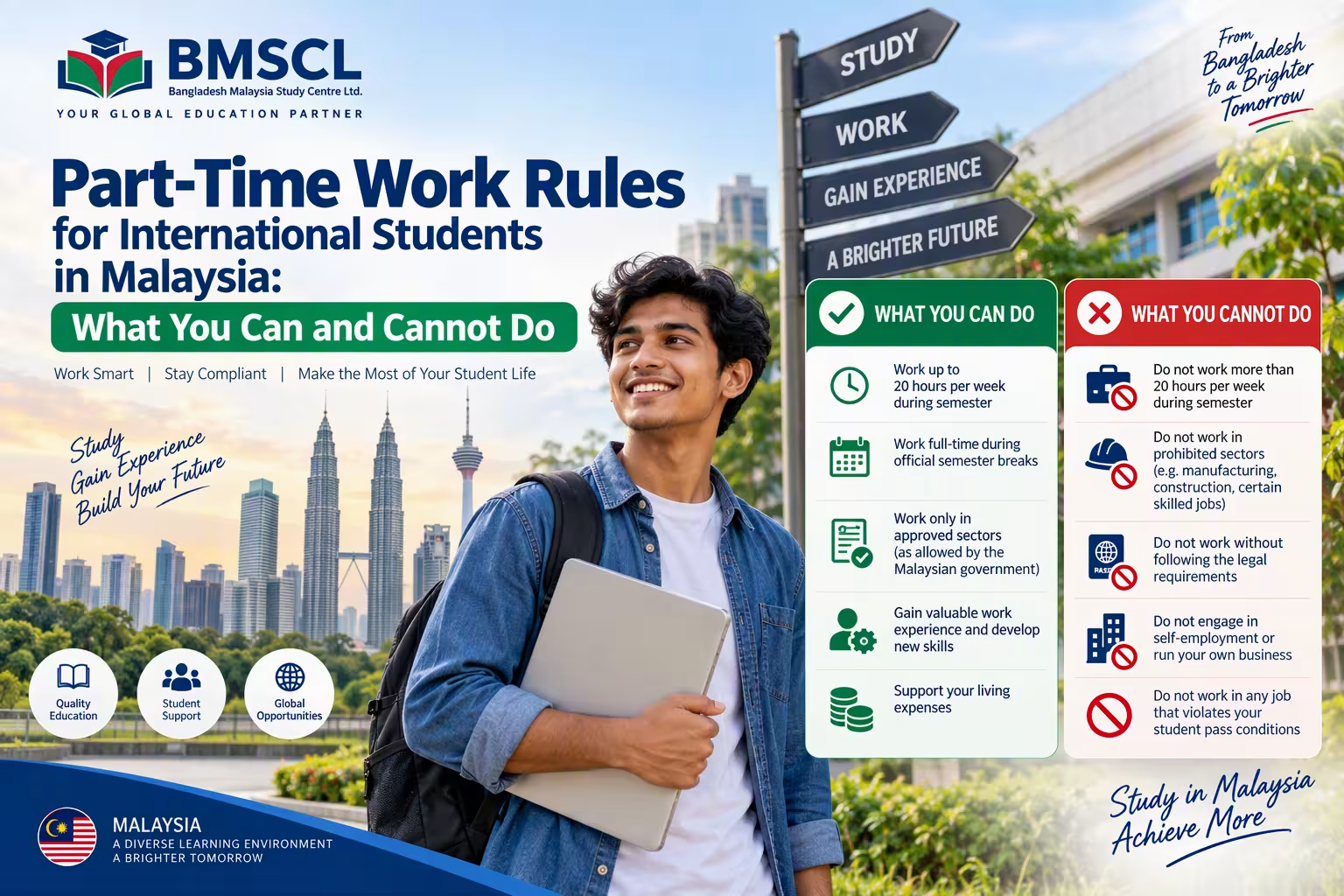
Malaysia remains a top destination for international education, drawing students from all over the world—including a large community from Bangladesh—with its high-quality universities and affordable lifestyle.
While managing expenses is a primary concern for many students, working while studying is heavily regulated in Malaysia. Unlike Western study destinations such as the UK or Australia, Malaysian immigration policies enforce unique restrictions to ensure academic performance remains the top priority.
This complete guide details what international students can and cannot do regarding part-time employment in Malaysia.
1. The Golden Rules: Working Hours and Timing
The framework set by the Malaysian Immigration Department and administered via Education Malaysia Global Services (EMGS) outlines strict boundaries for student employment:
-
Maximum 20 Hours Per Week: When work is permitted, students are strictly capped at working up to 20 hours per week. This is a hard ceiling, not an average.
-
Only During Semester Breaks: International students cannot work during active term time or regular semester sessions. Part-time work is exclusively permitted during official semester breaks or holidays that last longer than 7 days.
-
Institutional Good Standing: Your university’s international student office must confirm that you are maintaining satisfactory academic progress (minimum CGPA 2.0+ and strong class attendance) before you can engage in any work.
2. Approved Job Sectors: Where You CAN Work
International students are not free to work in any corporate or freelance role. Employment is legally restricted to specific sectors approved by the government:
-
Restaurants and Cafés: Working as a server, kitchen assistant, or crew member in local eateries, fast-food outlets, and campus dining halls.
-
Mini-Markets and Convenience Stores: Stocking shelves or assisting customers in neighborhood retail stores and minimarkets.
-
Hotels: Working in housekeeping, front-of-house, or hospitality support roles.
-
Petrol Stations: Serving customers or working in convenience kiosks at fuel stations.
3. Strict Prohibitions: What You CANNOT Do
To stay compliant with Malaysian immigration law and protect your student visa status, note the following strict restrictions:
-
No Term-Time Employment: Taking up a job while your classes are ongoing is a direct visa violation.
-
No Unauthorized Sectors & Banned Roles: Students are strictly prohibited from working as cashiers in certain settings, customer service/front-desk personnel, or student recruitment agents.
-
Strictly Banned Entertainment Roles: EMGS and Immigration explicitly forbid international students from working as singers, musicians, masseurs, or Guest Relation Officers (GROs).
-
No Self-Employment or Freelancing: Running an online business, freelancing independently, or participating in any entrepreneurial self-employment is prohibited on a standard Student Pass.
-
Exclusion for Language and Training Centers: Students enrolled strictly in standalone language training courses or private technical/skills centers are not eligible for part-time work permissions.
4. Expected Earnings and Financial Reality
-
Hourly Pay Rates: Permitted part-time roles typically pay between RM 8 to RM 13 per hour.
-
Monthly Estimates: Working the maximum 20 hours a week during a qualifying holiday block can net roughly RM 600 to RM 1,000 per month.
-
A Pocket-Money Supplement: Because work is restricted to holidays and specific sectors, part-time earnings should be viewed as supplementary pocket money. They are not sufficient to cover full tuition fees or total living costs, meaning students should arrive adequately funded through personal savings, family sponsorship, or scholarships.
5. How to Apply for Work Approval
Securing a part-time job requires official clearance:
-
Secure a Job Offer: Obtain an official employment offer letter from an approved establishment in a permitted sector.
-
University Endorsement: Submit your offer letter and a formal request through your university's international student office.
-
Immigration Approval: The university will help forward your paperwork to the Malaysian Immigration Department for official endorsement before you begin working.
Always verify your eligibility with your institution's international office before accepting any job to ensure complete compliance with current Malaysian immigration guidelines!
You might also like
Thinking of studying in Malaysia?
Apply free online and get a counsellor to guide you through admission and visa.
Start Free ApplicationEnjoyed this article?
Get the latest insights from BMSCL delivered straight to your inbox once a week.